

Feeding Asia's Biotech Factories
Every biologic drug is made by living cells, fed on a recipe drugmakers almost never change. Germany's Merck has made its biggest Asia-Pacific bet on that food—in South Korea, not Singapore.
Feeding Asia's Biotech Factories
Every biologic drug is made by living cells, fed on a recipe drugmakers almost never change. Germany's Merck has made its biggest Asia-Pacific bet on that food—in South Korea, not Singapore.
문상덕 에디터
“That Merck came here?”
The gray-haired taxi driver heading for Daejeon Station wanted to make sure he had heard right. His passenger had just come from the new Merck plant in Dungok, a district on the far northern edge of the city, where Daejeon meets Sejong, Korea’s administrative capital. Dungok is still a construction zone, a new industrial park taking shape around it; the cab took more than 20 minutes to show up. The driver lives in the neighborhood. Before he retired, he worked in the research lab of a Daejeon drugmaker, where, he said, he developed medicines with a Merck lab manual open in front of him.
American readers may need a footnote. This is not Merck & Co., the New Jersey–based maker of Keytruda, but the German company from which that business was split off during World War I. Merck KGaA, as it is formally known, grew out of a pharmacy in Darmstadt that opened in 1668. In the U.S. and Canada, its life-science business operates as MilliporeSigma. In Korea, as in most of the world, it is simply Merck.
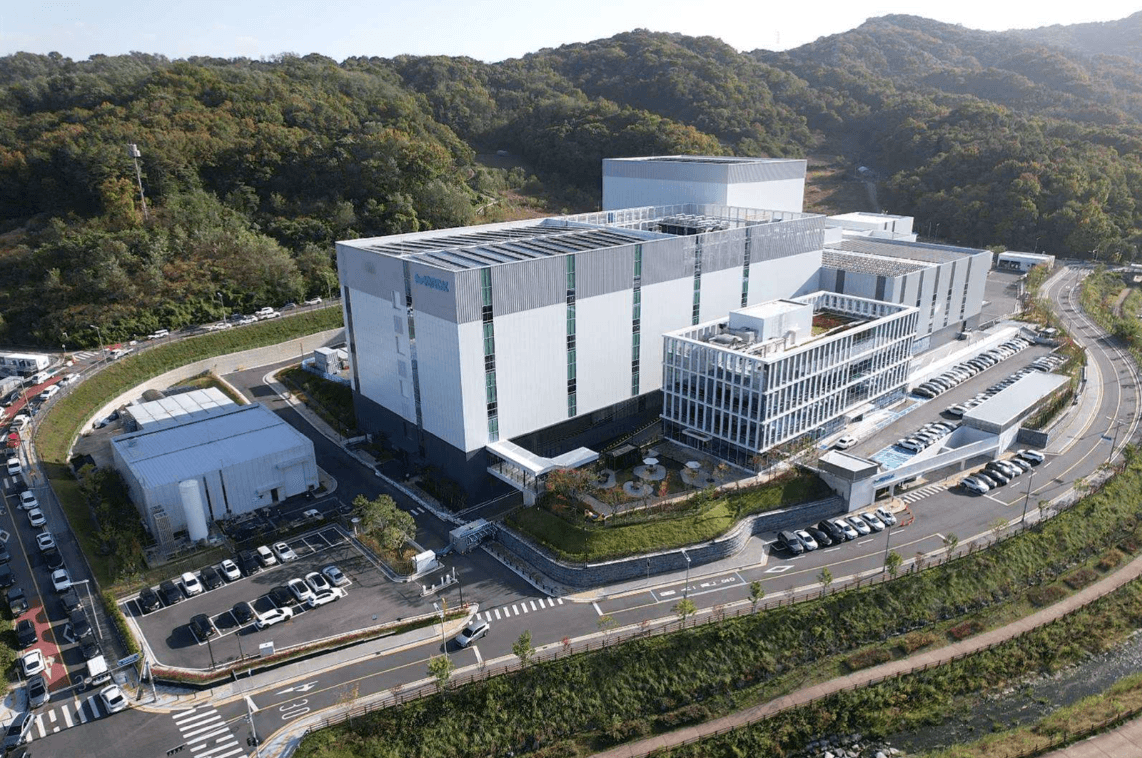
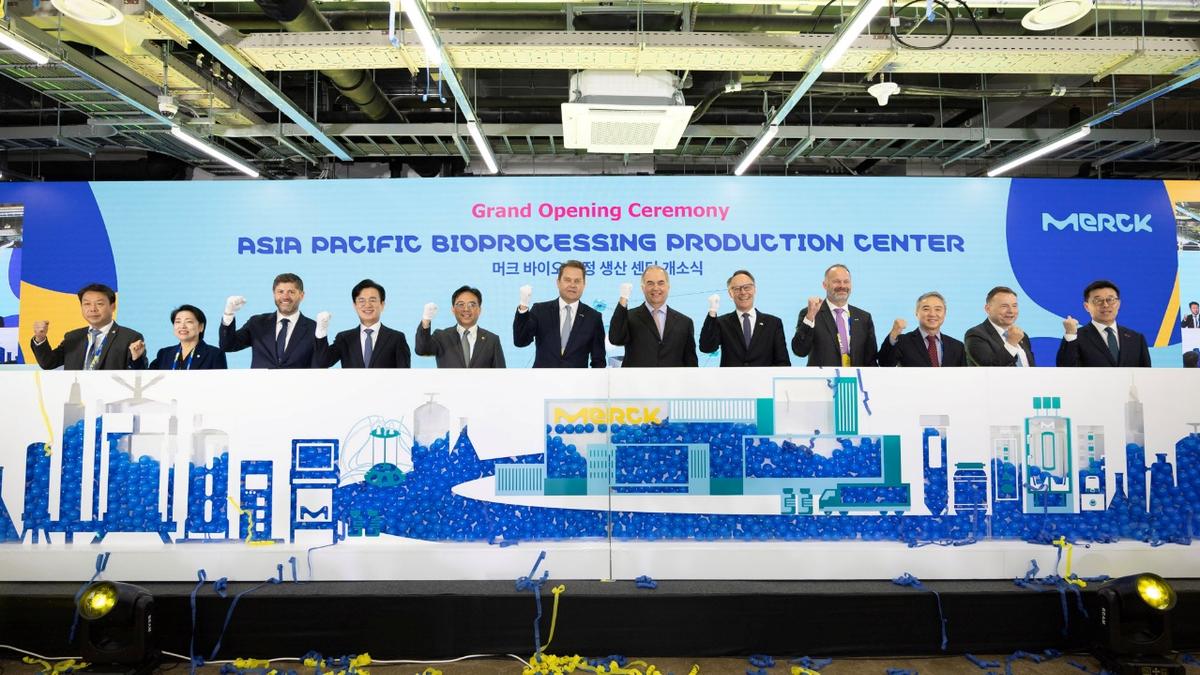
On Oct. 29, that Merck opened what it calls the Merck Asia-Pacific Bioprocessing Production Center. The investment, more than €300 million (about $340 million), is the largest Merck’s life-science business has ever made in the region—hence “Asia-Pacific” in the name.
The plant’s main product is cell-culture media: the nutrient broth in which cells live and grow. Biologic drugs aren’t synthesized from chemicals, the way a pill is. Living cells are grown in tanks, and the cells themselves produce the therapeutic molecule. Along with filters that strain out impurities and resins that separate out the drug itself, media are among the core materials of biomanufacturing.
Merck Life Science brought in €8.98 billion (roughly $10 billion) in sales last year, 42% of the group’s total. The global media market is concentrated: five companies, led by America’s Thermo Fisher Scientific and Merck, control 78.1% of it.
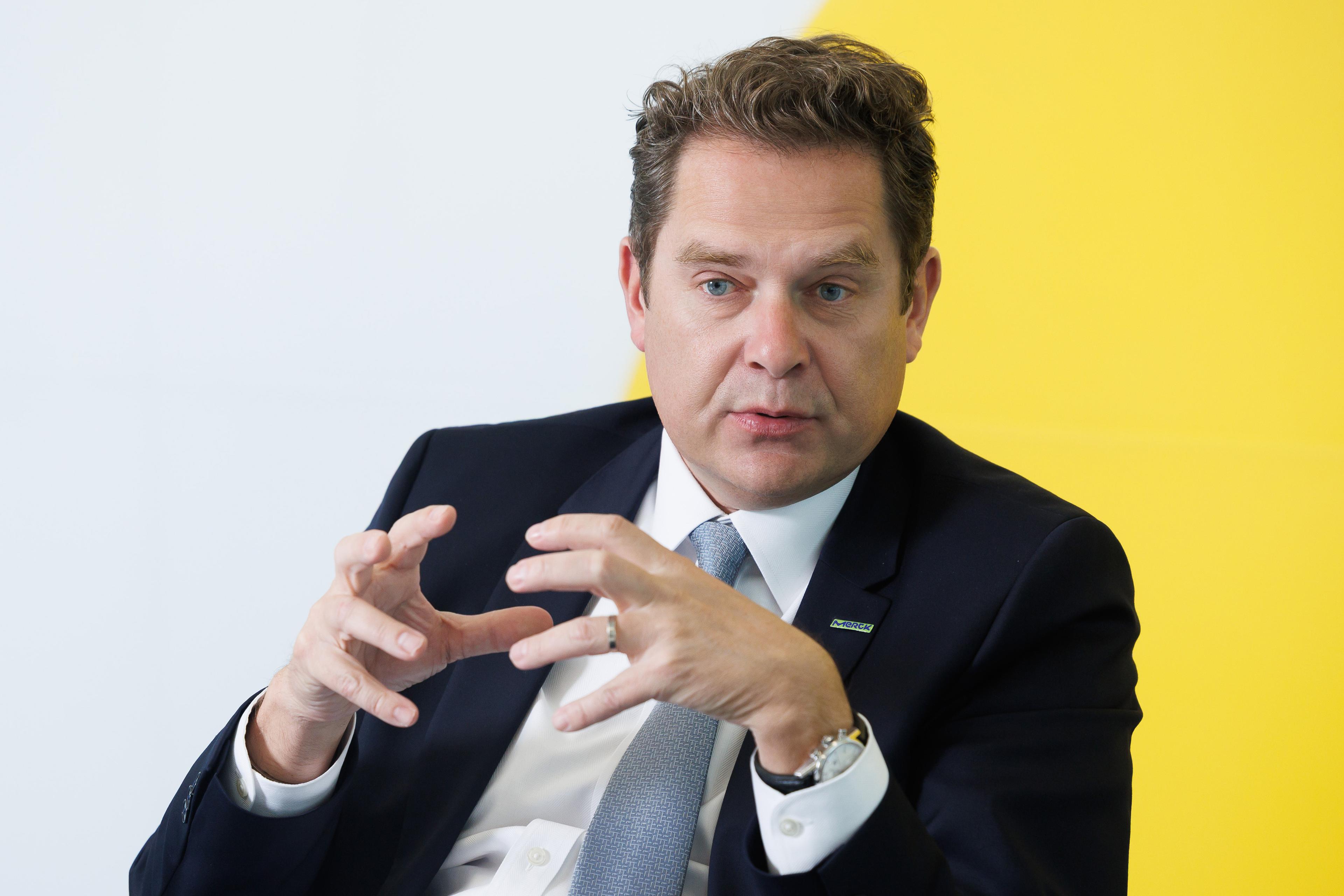
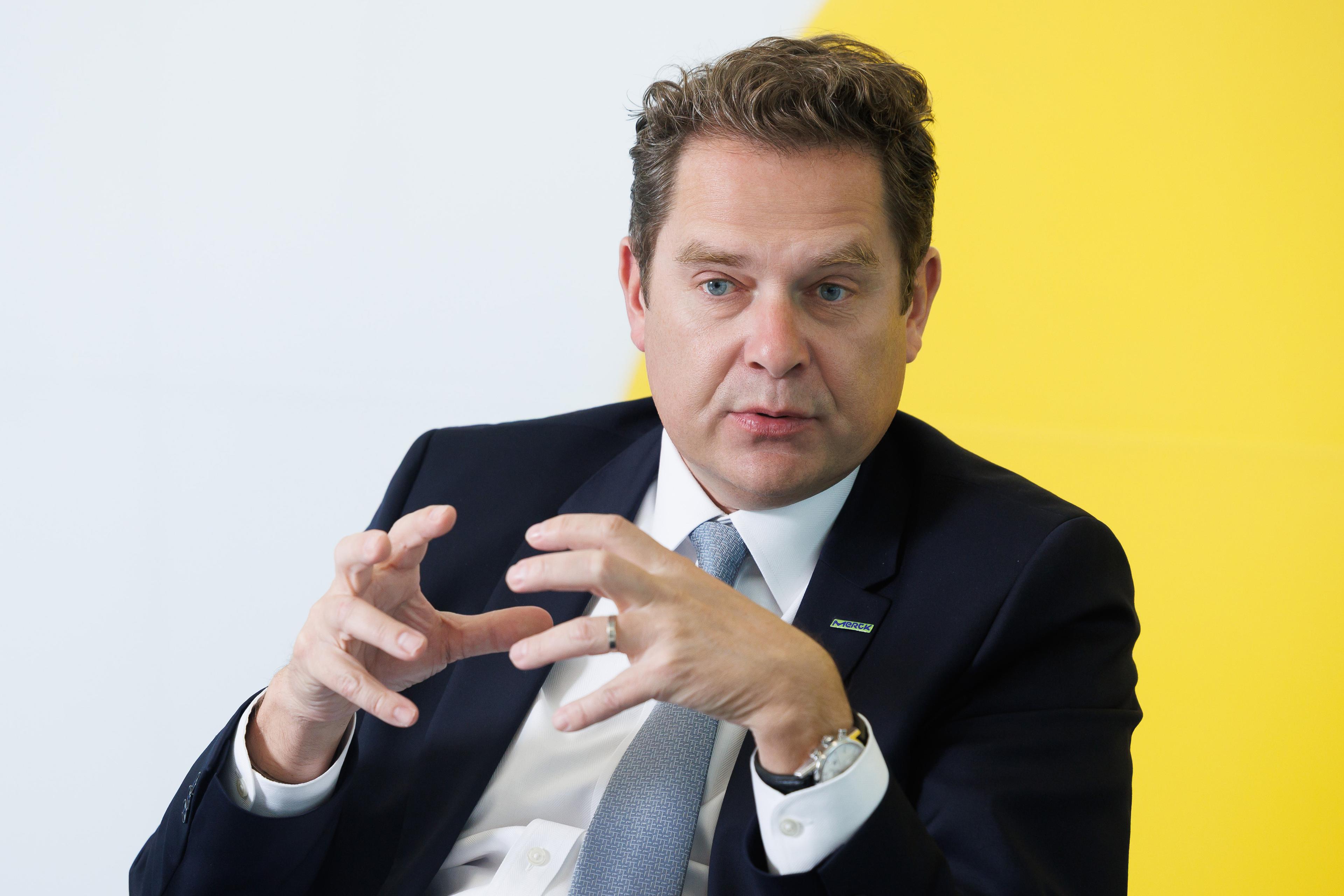
The Daejeon plant is a bet on where biologic drugs will be made in the coming decades, and on a lesson from the last pandemic, when drug developers in Korea discovered that what held them up was not equipment but raw materials. “We took a site big enough that we can expand if we need to,” Jean-Charles Wirth, CEO of Merck Life Science, told TIME on the day the plant opened. “Daejeon is a long-term investment.”
The Rolls-Royce of Plants
One executive at a foreign drugmaker in Korea was curious less about the price tag than about capacity. “The scale tells you which market they’re going after,” he says. That is exactly why Wirth won’t discuss it. “I’m not going to answer that,” he says. “It would be giving our competitors a hint.” His plan: get customers to qualify the plant, push utilization to 80% to 90%, and only then add equipment.
The brochure for customers doesn’t list annual capacity either. It does list the size of the equipment. Media ship in two forms: powder, which customers dissolve in water, and liquid, which is ready to use. Large-scale manufacturing relies mostly on powder, which is easier to ship and store. Daejeon’s powder line can make up to 8,000 kg (about 17,600 lb.) in a single batch—twice the batch size at Merck’s plant in Lenexa, Kans. (4,000 kg), and more than three times that of its plant at the Darmstadt headquarters (2,500 kg). The liquid line can produce up to 10,000 liters (about 2,600 gal.) per batch, on par with Merck’s flagship plants in St. Louis and in Irvine, Scotland. Batch size is not annual output—that depends on how many batches a line runs—but it is the clearest number Merck will give.
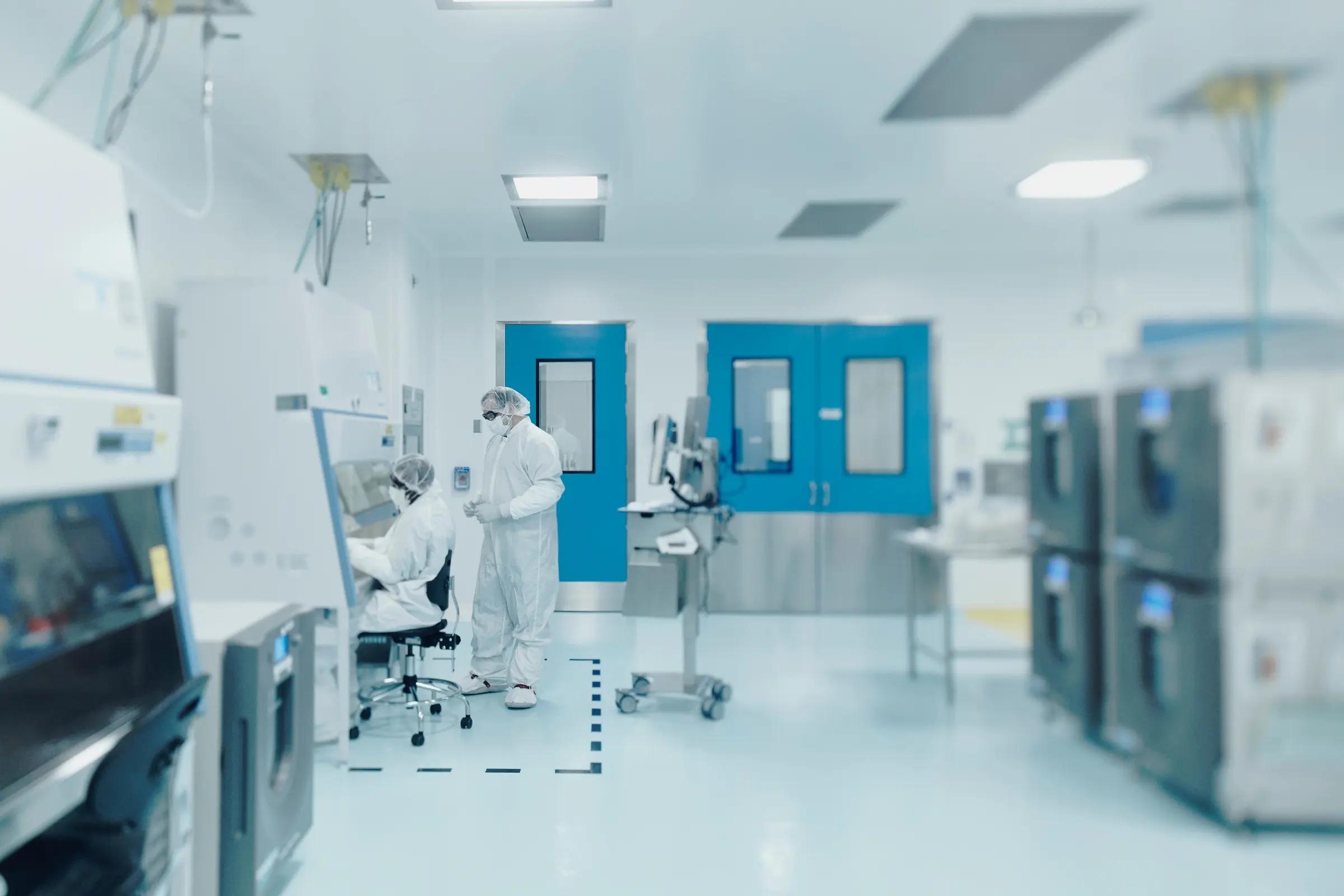
Inside, layer upon layer of power and cooling systems make the plant feel like a state-of-the-art data center. If the grid fails, emergency generators kick in within a minute and can keep the warehouse and automated systems running for 10 hours. The raw materials are sensitive to temperature, a staff member on site explained; lose power, and quality can no longer be guaranteed.
All of it converges on a single screen in the control room, where staff watch temperature and air pressure around the clock. The slightest deviation sets off an alarm. Wirth holds the room up as his example of smart manufacturing. “You need two people in this room, maximum,” he says. “Everything is automated.” For him, smart manufacturing extends to the robots moving across the warehouse floor, the interconnected equipment, and a system that tracks finished product from the warehouse all the way to the customer. “When it comes to smart manufacturing,” he says, “Daejeon is the Rolls-Royce.”
Why the Recipe Is Hard to Copy
There is nothing exotic about what goes into media: amino acids, vitamins, inorganic salts, sugars. That is why Korean and Chinese companies make media too. Yet Korean biotech firms still import 95% of their media and other raw materials. “Korea has world-class competitiveness in biopharmaceutical manufacturing and contract development and manufacturing,” Minister for Trade Park Jung-sung said at the opening ceremony, referring to CDMOs, the companies that develop and produce drugs on behalf of others. “But it still relies heavily on other countries for core materials.”
The head of a midsize Korean CDMO who attended the ceremony says his company once bought 20 billion won (about $14 million) worth of materials from a small domestic supplier. “But it hadn’t been validated,” he says, “so it was hard to keep using it.”
What matters is the formulation. Change the mix even slightly, and the cells grow at a different speed, produce a different amount of drug, and the quality shifts. So big drugmakers use proprietary formulations—“recipes”—tuned to their own cells. In Daejeon, Wirth says, Merck makes “customized products for very specific customer needs.”
Drugmakers develop their drugs, and win regulatory approval for them, using those recipes. Switch media, and they have to build a new record showing that the drug made with the new media is the same as the old one. In the materials business, the CDMO chief says, competition ultimately comes down to accumulated data.
“An ecosystem is taking shape where R&D is added on top of the existing CDMO manufacturing base.”
Kim Jin-woo, Prestige BioPharma
What COVID Taught
Merck’s portfolio, Wirth says, “covers the entire value chain, from academia and startups to big pharma and CDMOs.” Research that begins in a university lab with Merck reagents can carry through to commercial production with the same company’s media and filters. But even Merck faces the same test when it opens a new plant. “It takes customers months to qualify Daejeon,” he says. “Their experts will come and tell us, ‘This process is right, this one needs to be fixed.’”
That is also why capacity can’t simply be added when demand suddenly surges.
COVID-19 exposed that limit. In the spring of 2021, Korean biotech companies scrambled to secure media. Orders that once arrived in three months took eight. Word in the industry was that unless you had serious purchasing power, you couldn’t get media at all. Companies racing to develop vaccines and treatments ran into a wall on raw materials before they ran into one on equipment.
Before the pandemic, Wirth says, the industry was “growing every year, a fairly stable business. Then the pandemic hit, and demand skyrocketed. None of us were prepared.”
He divides the period that followed into a “COVID fever” and a “COVID cliff.” “There was no visibility, so some people over-ordered and overstocked. Some overinvested.” There were cases, he acknowledges, “where we could not supply some countries on time.” As the pandemic subsided, the reverse happened. “Some big pharma companies were sitting on two to three years of inventory. Working through it—that was the cliff.”
Wirth is a finance man. He was CFO of the life-science business before becoming CEO in June 2025. His first lesson from the pandemic: be “more disciplined” about investment. “You have to anticipate where and when to invest,” he says. “Customers don’t give us their forecasts, and we don’t give them ours.” Still, he says, “if we get closer to customers, we can bring the right product at the right time.”
The CDMO chief describes the same shift from the buyer’s side. “In the past, they made the product in advance and then sold it. Now they take a reservation, get paid, and only then plan production. That’s become a global trend,” he says—not just at Merck.
When you build to order, the closer the plant is to the customer, the shorter the wait. Until now, most of the Merck media used by Korean drugmakers was flown in from the U.S. or Europe. “With the Daejeon center, we can deliver to Korean customers by truck,” Wirth says. Japan is a two-hour flight away. Merck calls this its “in-region, for-region” strategy.
“If another pandemic comes, we are better prepared now,” Wirth says. Then he adds: “Hopefully it never comes again.”
Kim Jin-woo, vice chairman of Prestige BioPharma, who attended the opening, sees the plant’s significance less in supply than in research. “It’s not just a supply issue. It means we can do R&D together,” he says. “They’re close by, and Korea has a lot of research talent. That’s what makes it formidable.” Alongside its mass-production lines, the Daejeon plant has small-scale equipment, from 1 to 200 liters, that makes media in small lots for customers still refining their processes during development. “What’s big is that you get an ecosystem where R&D is added on top of the existing CDMO manufacturing base,” Kim says.
Not Singapore, Not Songdo
At the ceremony, Japanese and Chinese could be heard nearly as often as Korean. Representatives of customers from more than 10 countries filled the seats. Over four days, Wirth says, customers from Korea and Japan, as well as large multinationals, toured the plant.
“Where a company chooses to build its production facilities is becoming more than a matter of location,” Park said in his remarks. “It is a strategic choice that shapes future competitiveness.” For global drugmakers in Asia, the first stop has long been Singapore. AbbVie keeps its only Asian manufacturing plant there, producing the active ingredient for Humira (adalimumab), its autoimmune blockbuster—an antibody drug made by growing cells. China’s WuXi Biologics, a CDMO, began building a $1.4 billion facility there in 2024. Merck, too, runs its Asian contract-testing hub in Singapore.
India, Wirth adds, “is catching up fast these days in CDMO, especially in biosimilars,” the lower-cost versions of biologic drugs whose patents have expired. And then, he says, “there’s Korea.”
Wirth first came to Korea in 2011, the year Samsung Biologics was founded. “Back then, Samsung Biologics was just getting started,” he says. Fifteen years later, with 784,000 liters of capacity, it is the world’s largest CDMO. “It’s no secret that Samsung is one of our global strategic customers,” Wirth says. “Within a few kilometers of the Daejeon plant, we have several strategic customers.” He has visited Korea roughly once a year since 2011. “We want to be seen as a partner,” he says, “not as a supplier.”
Over those 15 years, he has watched more than factories grow. “The level of education in Korea is quite unique,” he says—one reason Merck, which needs talent in research, production, and engineering, decided to invest here.
And Daejeon, he says, is where that talent is concentrated. “Daejeon is known as Korea’s science city,” he says. “We wanted to invest in a region where we can attract new talent with a strong scientific background.” The city’s Daedeok Innopolis research district is home to KAIST, the country’s leading science and technology university, as well as the Korea Research Institute of Chemical Technology and the Korea Research Institute of Bioscience and Biotechnology. Wirth names these government-funded institutes as potential partners. Merck began talks with KAIST in May 2023, when it signed an investment memorandum with the city, and the two signed a cooperation agreement a year later. KAIST researchers use Merck products in work on synthetic biology, mRNA, and cell-line engineering. In March, Merck opened a chemistry collaboration facility on the KAIST campus.
“We’re learning from KAIST about the new trends and megatrends they are picking up in the market,” Wirth says. Over the long term, he wants to build a talent pipeline with the university. When the interview ended, he was on his way to meet KAIST’s new president.
Speed mattered too. Merck officials first toured the Dungok site in September 2022. Lee Jang-woo, then Daejeon’s mayor, visited Merck’s Darmstadt headquarters that November. A memorandum of understanding followed in May 2023 and groundbreaking in May 2024; the plant was finished two years and five months later. It was won under Lee and opened under his successor, Mayor Heo Tae-jeong.
“Korean policymakers were true partners,” Wirth says. Asked what he likes about Korea, he names “the speed of making decisions and getting things done,” then adds, in Korean, ppalli-ppalli—hurry, hurry. In Seoul, he rides the subway. “People are fast. Even parents walking down the street with small children move ppalli-ppalli,” he says. “Speed matters. I really like that.”
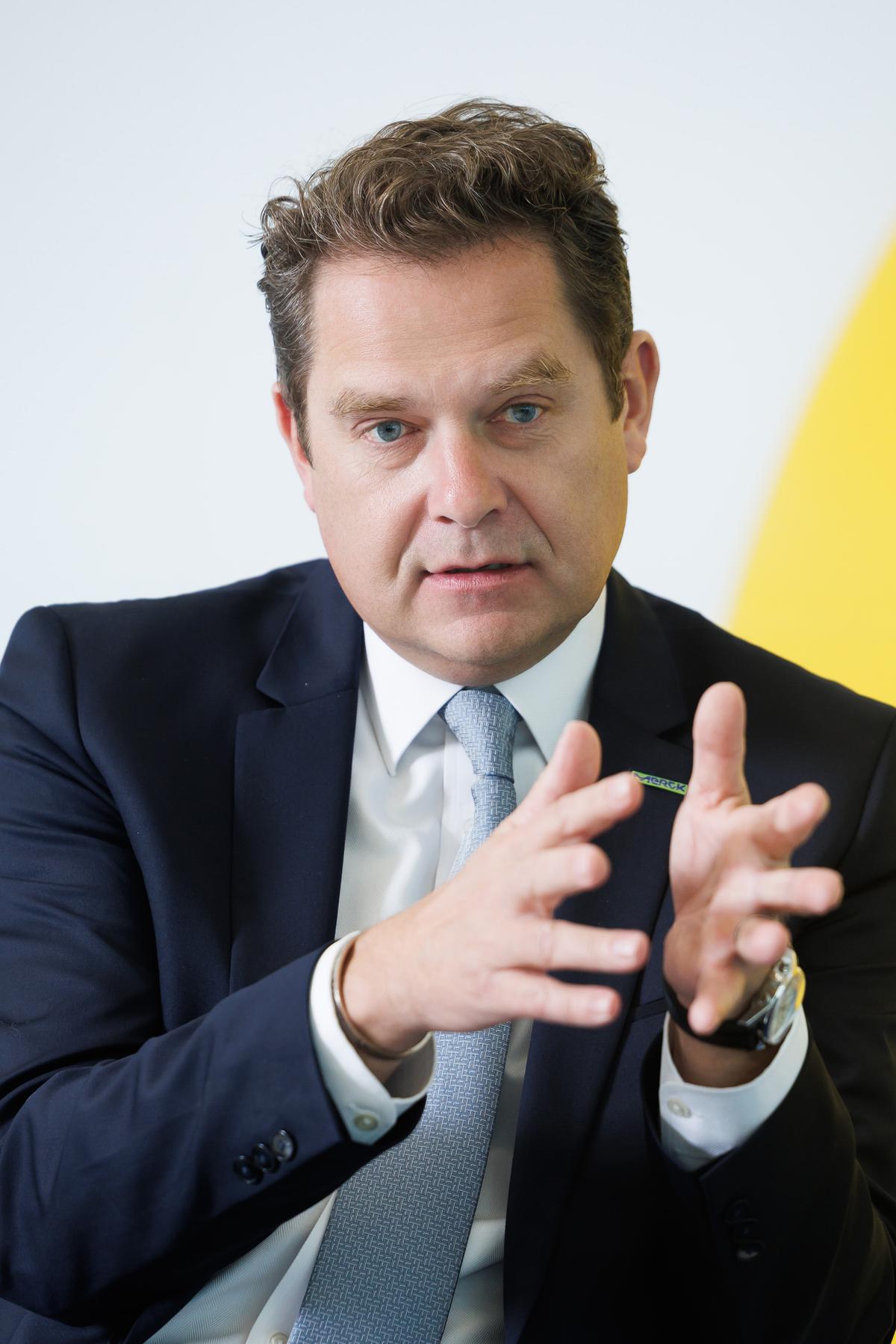
“Speed matters. I really like that.”
Jean-Charles Wirth, CEO, Merck Life Science
From Korea to Asia
Closing his remarks at the ceremony, Heo shared a conversation he’d had with Merck executives just beforehand. “They told me two things,” he said. “One was their thanks for helping them move the project forward quickly and precisely. The other was their intention to expand further.”
Asked about expansion, Wirth says, “The investment we have already made is very significant.” The first gate is customer qualification. Once the plant clears it, production will ramp up, with the first volumes going to Korean customers. “I hope the next step comes very quickly,” Wirth says, “and that we go from ‘Daejeon for Korea’ to ‘Daejeon for Asia.’”
Adding production lines would come after that. Merck could also broaden what the plant makes, he says; whether a year from now or five, it has the capability to add other products if it chooses. His examples are filtration products and quality-testing products, used in everything from final-product and pre-release testing to monitoring the air in clean rooms. “If our assumptions about expansion prove right,” he says, “we have many options ahead of us.”
As the interview winds down, he has one request. “When you leave this room, remember just one thing,” he says. “Asia is a strategic pillar for the future of the biopharma and CDMO business. If we invest strategically in this region, Merck Life Science can win.”
by Mun, Sangdeok / Daejeon, South Korea
이 기사 공유하기: